
2021-04-14
Lawyer Fawaz Alkhateeb calls for the abolition of Law No. (44/1968) which prohibits eating in public places during fasting in Ramadan
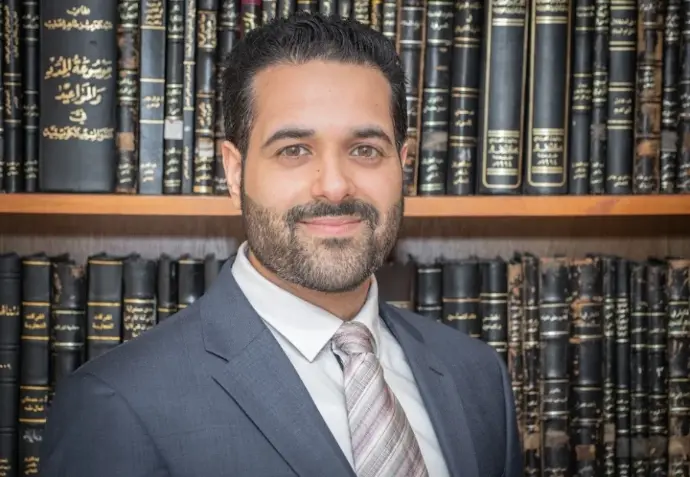
Dr Fawaz AlKhateeb from Taher Group Law Firm called for reconsideration of the Kuwaiti law, regarding fast-breaking in public during Ramadan, considering it a non-human, non-logical law in addition to the constitutional suspicion surrounding it.
AlKhateeb stated that Law No. 44 of 1968 regarding breaking the fast in public during Ramadan punishes by imprisonment for a period of up to a month. “This punishment is applicable whether the person is a Muslim, non-Muslim, or with no religion at all,” he said, clarifying that the Explanatory memorandum of the Law brought justifications based on that the state’s religion is Islam and that public order must be observed by all Kuwaiti residents, and that the Law came to preserve the feelings of the people of Kuwait and adhere to the religion and Islamic values, and that breaking the fast in public places hurts Muslims feelings, adding that the Law is applicable even if this is for someone who has an excuse and illness!
AlKhateeb indicated that this law is repeatedly applied on non-Muslim foreigners, recalling what happened years ago to a non-Muslim foreign doctor “who came in Ramadan to the State of Kuwait for the first time to work, and after leaving the airport, she was eating in the taxi, so a policeman stopped the taxi and referred her for investigation because of breaking the fast and she was imprisoned in view of the case. After her release, she decided immediately to leave Kuwait as she was surprised with the measures that were taken against her and because of her ignorance of Islam as a religion and the lack of awareness of such a law. He said that this case and many other similar cases make us as jurists call for the abolition of this legislation," indicating that there are five reasons why this law must be reconsidered.
The first reason is that “This law violates the Constitution in Articles 7, 30, 35, 36 and 175, as this legislation contradicts the principles established by the constitution which stress on the importance of guarantying personal freedom, and that the purpose of the constitution is to achieve justice, and guarantying freedom of absolute belief to religions and even if the person does not believe in any religion, stressing that the constitution is indivisible and the principles of freedom and equality are applied to all persons of different religions and that there is no amendment except for more guarantees and freedoms,” Alkhateeb said pointing out that the central argument in this law is flawed when the aim of the rule of law is to impose religious beliefs on a non-Muslim, which constitutes a kind of exaggeration in imposing doctrine using the law.
Regarding the second reason, AlKhateeb stated that the Law contradicts with the concept of the civil state and the nature of the diverse society, indicating that Kuwait is a civil state, meaning that it protects and preserves all members of society equally regardless of their different religious and intellectual affiliations, and it urges their unity and cohesion, as it is a constitutional state of institutions that accommodate the foreign element and does not exclude it, pointing to the existence of traditional (usurious banks) as well as insurance companies in Kuwait, and that the state contracts with a non-Muslim foreign army to impose protection along with other aspects that confirm the openness of the state and its acceptance of global diversity.
Alkhateeb added that the third reason revolves around the law’s violation of common sense, as it is unacceptable to impose religious obligations on non-Muslims and forcing them to refrain from behaviours that are not related to their beliefs, explaining that “our feelings as Muslims will not be harmed if a non-Muslim eats food in front of us. As Kuwaiti people travel to foreign countries, fast and perform their acts of worship, and I believe that imposing Islam on a non-Muslim is in fact contrary to the concept of religious and moral peace and the valuable Islamic messages and values that we describe as having the universal validity for the human being, and assumed calling and preaching without the use of coercive means in imposing belief as we are members of a civil state,” he said.
Alkhateeb also dealt with the subject of religious excuses of not fasting such as travel, sickness, and other excuses, pointing out that Kuwait does not impose the pillars of religion, such as prayer on time, and does not prevent usury, wondering how “we force Non-muslims to perform Islamic duties because of feelings that will not be affected in any way because of fasting, adding that the aim of fasting is to feel how the poor feels and be patient". Al-Khateeb also indicated that there is a difference between the doctrines of the Islamic religion in the state such as the difference in the date of the start of Ramadan among the followers of the Jaafari (shia) school and the followers of the Sunni school, and the time of fasting and breaking the fast may also differ between the schools.
Fourthly, Alkhateeb asserted that the law violates the economic and developmental goals, especially since the state calls and encourages direct investment from foreign companies. “In Kuwait, we have up to three millions expatriates, many of them are non-Muslims and from various countries, and therefore a suitable work environment must be created especially in light of the Kuwaiti financial deficit to pay salaries and the high risk of not diversifying sources of income and the scarcity of foreign expertise in the specialized labor market,” he said, indicating that many non-Muslim expatriates work in public places under the sun and at high temperatures during the day of Ramadan for long hours, and It is illogical to prevent them from drinking and eating even though they are non-Muslims, especially those who work in building bridges, contracting and cleaning, indicating that the authority’s issuance of decisions regarding the closure of restaurants and the prevention of delivery during the day in Ramadan is unjustified; wondering “So do such laws and decisions provide an appropriate and encouraging environment for companies, investors and non-Muslim foreigners in the State of Kuwait? Rather, it is a work environment that repels skilled foreign workers and investors.
Concerning the fifth justification to reconsider the Law, AlKhateeb stated that many comparative laws in the Islamic countries do not criminalize this act or at the least is less burdensome in criminalizing it, citing countries such as Oman as according to its Penal Law No. 7/74 in Article (312), the maximum penalty is imprisonment (10 days) or the fine and the law only applies on Muslims that do not have a legal excuse. Also in Morocco, the law punishes everyone who is known to embrace Islam and break the fast publicly during the day in Ramadan without an excuse. Furthermore, in Bahrain, according to Decree-Law No. 15 of 1976, Article (309) the punishment is applicable only to Muslims. Alkhateeb added that the Kingdom of Saudi Arabia mitigated the role of the Committee for the Promotion of Virtue and Prevention of Vice and followed a policy of economic openness and promoting tourism and entertainment in general.
AlKhateeb added, that all human beings are morally equal and enjoy independence. The duty from which the duty of obedience is derived can be a general moral duty that promotes justice and impartiality. It is clearly unfair to punish a non-Muslim for eating in a public place because of what is called hurting the feelings. The imposition of religious laws is one aspect of compulsion that causes the emergence of hypocrisy in society. It is a compulsion in showing a religious practice other than what the person believes or other than what he chooses which leads to a state of hypocrisy and stubbornness. Acts of worship should not be regulated by laws, as the rule of law is not forcing beliefs. Rather, the only right could be to apply social criticism to Muslims who break the fast without an excuse.
AlKhateeb also pointed out that the justifications for obeying the law and coercing it and using force are based on applying the principle of fairness, justice, freedom and support for national institutions and interests in the context of the broader value, and limiting the potential negative consequences of disobedience to the political system, considering that all of the above “are absent in this moody, fruitless law,” accordingly, a shift must be made from the ideological centrality of religious belief to the pluralism rooted in social and cultural manifestations and the tremendous societal diversity.
AlKhateeb concluded that this opinion remains within the limits of dialogue and constitution that guaranteed every human being’s right of expression, “and we believe that the current law does not concern itself with the larger view of the issue, still, it is an obligation of involuntary compliance and respect and is binding on all unless it is amended or repealed.
Source: Arab Times
دعا المحامي فواز خالد الخطيب من مجموعة طاهر القانونية إلى إعادة النظر بقانون المجاهرة بالإفطار، معتبراً أنه قانون غير حقوقي أو إنساني أو منطقي علاوة على وجود شبهة دستورية تكتنفه.
وبين الخطيب بأن القانون رقم 44 لسنة 1968 بشأن المجاهرة بالإفطار في رمضان يعاقب بالحبس لمدة قد تصل لشهر بسبب الإجهار في مكان عام بالإفطار في نهار رمضان، مشيراً أن هذه العقوبة تنطبق سواء أكان الشخص مسلماً أو غير مسلم، كأن يكون مسيحياً أو من أي دين آخر أو ولو كان لا يعتقد بدين، موضحاً بأن التشريع تضمن في مذكرته تفسيريه على مُبررات أساسها أن دين الدولة هو الاسلام ويتوجب مراعاة النظام العام على جميع سكان الكويت، وأنه جاء حفاظاً على أحاسيس أهل الكويت والتمسك بالدين والقيم الاسلامية، وأن الإفطار في الاماكن العامة يؤذي شعور المسلمين، مضيفاً بأن التشريع ينطبق حتى لو كانت هذه المجاهرة مِمن له عذر في افطاره!
وأشار الخطيب بأنه يتكرر تطبيق هذا القانون على الأجانب غير المسلمين، مستذكراً ما حدث منذ سنوات لطبيبه أجنبية غير مسلمة أتت في رمضان لدولة الكويت لأول مره للعمل وبعد خروجها من المطار كانت تتناول الطعام في تاكسي الأجرة فاستوقف المركبة شرطي وأحالها للتحقيق بسبب مجاهرتها بالإفطار في رمضان وحبست على ذمة القضية، وبعد الإفراج عنها قررت مباشرةً مغادرة دولة الكويت لتفاجئها بالإجراءات التي اتُخذت بحقها وبجهلها بالإسلام كدين وعدم وجود توعية بمثل هذا القانون، موضحاً بأن هذه القضية وقضايا عديدة أخرى مُماثلة "تجعلنا كحقوقيين ندعو إلى إلغاء هذا التشريع،" مبيناً وجود خمسة مبررات بموجبها يتوجب إعادة النظر في هذا القانون.
وبين الخطيب بأن المبرر الأول هو مخالفة القانون للمواد 7 ، 30 35 و36 و 175 من الدستور حيث أن هذا التشريع يتعارض مع المبادئ التي قررها الدستور وأهمية أن الحرية الشخصية مكفولة، وأن غاية الدستور تحقيق العدالة، وحرية الاعتقاد المطلق مكفولة للأديان السماوية حتى ولو كان الشخص لا يعتقد بأي دين، مشدداً على أن الدستور لا يتجزأ ومبادئ الحرية والمساواة تطبق على كافة الأشخاص باختلاف أديانهم ولا تعديل إلا للمزيد من الضمانات والحريات، وموضحاً أيضاً بأن الحجة المركزية في قانون المجاهرة معيبة حينما تكون سلطة القانون غرضها فرض المعتقدات الدينية على غير مسلم، الأمر الذي يشكل نوع من المغالاة والمبالغة في فرض العقيدة باستخدام القانون.
وعن المبرر الثاني، قال الخطيب أنه القانون يخالف مفهوم الدولة المدنية وطبيعة المجتمع المتنوع، مبيناً بأن الكويت دولة مدنية أي أنها تحمي جميع أعضاء المجتمع وتحافظ عليهم بشكل متساوِ بغض النظر عن اختلاف انتماءاتهم الدينية والفكرية، وتحث على وحدتهم وتماسكهم، فهي دولة دستور ومؤسسات تستوعب العنصر الأجنبي ولا تقصيه، مشيراً إلى وجود بنوك تقليدية وربوية وكذلك شركات تأمين في الكويت، كما أن الدولة تتعاقد مع جيش أجنبي غير مسلم لفرض الحماية وغيره وكل هذه المظاهر تُأكد انفتاح الدولة وتقبلها للتنوع العالمي.
وأضاف الخطيب بأن المبرر الثالث يتمحور حول مخالفة القانون للمنطق السليم حيث أنه من غير المقبول فرض التعاليم والفرائض الدينية على غير المسلمين وإكراههم بالامتناع عن القيام بتصرفات لا تمت لدينهم ومعتقداتهم بصلة، موضحاً بأن "مشاعرنا كمسلمين لن تخدش في حال تناول غير المسلم الطعام أمامنا، فالكويتيون يسافرون لدول اجنبية ويصومون ويقومون بشعائرهم وأعتقد بأن فرض الإسلام على غير المسلم هو في حقيقته مخالف لمفهوم السلام الديني والأخلاقي والرسائل والقيم الإسلامية القيمة التي نصفها بأنها تتمتع بالصلاحية العالمية للإنسان، ويفترض الدعوة والوعظ دون استعمال وسائل الاكراه في فرض المعتقد في ظل وجودنا في دولة مدنية.
كما تناول الخطيب موضوع العذر الشرعي كالسفر والمرض والعذر النسائي، مشيراً إلى أن الكويت لا تفرض أركان الدين كالصلاة بأوقات الأذان وغيرها ولا تمنع الربا، متسائلً كيف "نجبر الغير على فرائضنا بسبب مشاعر لن تمس بأي حال بسبب الصوم الذي هو حكمته الشعور بالفقير والصبر على الطعام والشراب ومجاهدة النفس." وأشار الخطيب أيضاً إلى وجود اختلاف بين مذاهب الدين الإسلامي بالدولة مثل اختلاف موعد بدء رمضان لدى أتباع المذهب الجعفري واتباع المذهب السني كما قد يختلف موعد وقت الإمساك والإفطار بين المذاهب.
واعتبر الخطيب بأن المبرر الرابع هو مخالفة القانون للتوجه الاقتصادي التنموي، خاصة وأن الدولة تنادي وتشجع الاستثمار المباشر من الشركات العالمية الأجنبية، "ولدينا في الكويت وافدون يصل عددهم لثلاثة ملايين وافد العديد منهم من غير المسلمين ومن شتى دول العالم، وعليه يتوجب خلق بيئة عمل مناسبة لاسيما في ظل وجود عجز مالي لسداد الرواتب وخطر حقيقي بعدم تنوع مصادر الدخل وشح في الخبرات المهنية الأجنبية في سوق العمل المتخصص،" مشيراً إلى أن العديد من الوافدين غير المسلمين يعملون بأماكن عامة تحت أشعة الشمس وبدرجات حرارة عالية وحارقة في نهار رمضان، ولساعات طويلة ومن الغير منطقي منعهم من تناول الشراب والطعام رغم أنهم غير مسلمين لاسيما من يعمل في بناء الجسور والمقاولات والتنظيف، مبيناً بأن إصدار السلطة قرارات بشأن إغلاق المطاعم ومنع التوصيل بنهار رمضان أمر غير مبرر، "فهل مثل تلك القوانين والقرارات توفر بيئة ملائمة ومشجعة للشركات والمستثمرين والأجانب غير المسلمين في دولة الكويت؟ بل هي بيئة عمل طاردة للعمالة الأجنبية الماهرة وللمستثمرين.
وحول المبرر الخامس، قال الخطيب إن العديد من القوانين المقارنة في بعض الدول الإسلامية لا تجرم الفعل أو أنها على أقل تقدير أقل وطأة في تجريمه، مستشهداً بدول مثل سلطنة عمان ووفق قانون الجزاء رقم 7/74 في المادة (312) تكون العقوبة حدها الأقصى الحبس (10 أيام) أو الغرامة في حال نقـض الصيام علناً في شهر رمضان وتطبق على المسلمين فقط إذا لم يكن لديهم عذر شرعي، وكذلك في المغرب حيث يعاقب القانون كل من عرف باعتناقه الدين الإسلامي، وتجاهر بالإفطار في نهار رمضان دون عذر شرعي، وفي البحرين وفقاَ للمرسوم بقانون رقم 15 لسنة 1976 نصّت المادة (309) بان العقوبة على المسلمين والملل المعترف بها وفق وصف المشرع، مشيرا في هذا الصدد إلى أن المملكة العربية السعودية قلصت من دور لجنة الأمر بالمعروف والنهي عن المنكر واتبعت سياسة الانفتاح الاقتصادي وتعزيز السياحة والترفيه بصفة عامة.
وأضاف الخطيب مؤكداً على أن البشر مُتساوون أخلاقيًا ويتمتعون بالاستقلالية، وأن الواجب الذي يُستمد منه واجب الطاعة يمكن أن يكون واجبًا أخلاقيًا عاماً يُعزز العدالة والحياد، وليس من العدالة والحياد في شيء مُعاقبة غير المسلم بسبب تناوله الطعام في مكان عام بسبب يتعلق بالشعور والذوق، مشيراً إلى أن فرض قوانين دينية وجه من أوجه القسر الذي يَتسبب بتصدر حالة النفاق في المجتمع باعتباره إجبارا بإظهار مُمارسة دينية على غير ما يَعتقد الشخص أو على غير حالته الصحية أو على غير ما يختار وهو ما يؤدي لحالة من النفاق أو العناد، ومن الأجدى النصح والتقويم الاجتماعي لأن العبادات لا تقوّم بالقوانين، مشيراً إلى أن سُلطة القانون غير مُقنعة وليست مِعياراً لسيادة القوانين العامة والمجردة بشكل متساو لتعارضها مع حقوق بسيطة، إنما حدود المُجاهرة يجب أن يكون النقد الاجتماعي للمُسلم المفطر فقط بغير عذر.
كما اشار الخطيب إلى أن التبريرات لإطاعة القانون والإكراه به واستخدام القوة مبناها تطبيق مبدأ الإنصاف والعدل والحرية والدعم للمؤسسات والمصالح الوطنية في سياق القيمة الأوسع، والحد من العواقب السلبية المحتملة للعصيان للنظام السياسي، معتبراً أن كل ما سبق "يغيب في هذا القانون الوضعي المزاجي العقيم، وعليه يجب التحول من المركزية العقائدية للمعتقد الديني إلى التعددية المتأصلة في المظاهر الاجتماعية والثقافية والتنوع المجتمعي الهائل."
وختم الخطيب مؤكداً على أن هذا الرأي يبقى في حدود الحوار والدستور الذي كفل لكل إنسان حق التعبير، "ونرى أن القانون الحالي لا يهتم بالصورة الأكبر للموضوع إلا أنه واجب الامتثال غير الطوعي والاحترام وملزم للكافة ما لم يعدل أو يلغى.
المصدر: رؤى